KitchenAid Bowl-Lift Mixer & KitchenAid Tilt-Head Mixer share many similarities, but there are also important differences, such as quality, performance, features, design, and connectivity. If you want the best one between them, I Would recommend the KitchenAid Bowl-Lift Mixer rather than the KitchenAid Tilt-Head Mixer.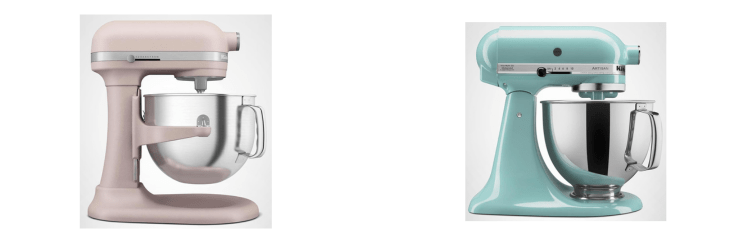
Why Do I Recommend The KitchenAid Bowl-Lift Mixer?
- The KitchenAid Bowl-Lift Mixer features a higher-torque motor for stronger performance and maintain speed under heavy loads, whereas the KitchenAid Tilt Head Mixer uses a lighter-duty motor.
- KitchenAid Bowl-Lift Mixer supports up to 7 quarts bowl for preparing multiple or oversized batches in one run, while the KitchenAid Tilt Head Mixer supports smaller bowls that limit batch size.
- It has an industrial-style lift mechanism to keep the bowl stable during high-resistance mixing for reduced wobble and mess, whereas the KitchenAid Tilt Head Mixer uses a hinged head.
- The KitchenAid Bowl-Lift Mixer includes reinforced attachment points for sustained heavy-duty use to enhance durability over long mixing sessions, while the KitchenAid Tilt Head Mixer features a lighter consumer-grade attachment connector.
- KitchenAid Bowl-Lift Mixer features a wider base and greater weight for steadier countertop placement during vigorous kneading, while the KitchenAid Tilt Head Mixer uses a lighter structure.
- It supports pro-style stainless-steel bowl designs for reliable handling of heavy contents and long-term wear resistance, whereas the KitchenAid Tilt Head Mixer includes lighter bowl options.
- The KitchenAid Bowl-Lift Mixer has elevated beater-to-bowl clearance adjustment for precise alignment during heavy mixing to reduce scraping interruptions, whereas the KitchenAid Tilt Head Mixer relies on a hinge-based adjustment.
- KitchenAid Bowl-Lift Mixer features more powerful gearing and cooling for extended bread-making sessions without motor strain, while the KitchenAid Tilt Head Mixer which is better suited for shorter, everyday mixing tasks.
Maybe the KitchenAid Tilt-Head Mixer can make you comfortable because it’s a little bit cheaper than the KitchenAid Bowl-Lift Mixer. But you have to compromise all the above-mentioned features. Now the Decision is Yours. I hope it was helpful to choose the right one.
Side-by-Side Comparison
| Feature | KitchenAid Bowl-Lift Mixer | KitchenAid Tilt-Head Mixer |
| Design Mechanism | Fixed head, bowl raises on arms | Head tilts back on hinge |
| Bowl Capacity Range | 5–7+ quart bowls | 3.5–5 quart bowls |
| Typical Motor Power | Higher wattage / higher torque | Lower wattage / lighter-duty torque |
| Intended Use | Heavy doughs and large batches | Everyday baking and smaller batches |
| Stability Under Load | More stable with dense mixes | More movement with very thick mixes |
| Height Profile | Taller, higher overall height | Shorter, more cabinet-friendly height |
| Countertop Space | More vertical clearance required | Fits under more standard cabinets |
| Bowl Mounting | Bowl clips into lift arms | Bowl locks into base plate |
| Access to Bowl | Access via lowering bowl | Access via tilting head up |
| Head Clearance for Tools | Head fixed, less clearance | Head lifts, more clearance for tools |
| Control Feel During Mixing | Bowl moves relative to head | Head moves away from bowl |
| Dough Capacity | Higher maximum dough volume | Lower maximum dough volume |
| Ideal Batch Size | Multiple or large batches | Single or moderate batches |
| Attachment Compatibility | Emphasis on pro and heavy-duty lines | Emphasis on home and mid-range lines |
| Bowl Material Options | More stainless-only options in pro lines | Wider mix of stainless and glass/ceramic in consumer lines |
| Aesthetic / Color Variety | Fewer color and finish choices | More color and special-finish choices |
| Perceived Durability | More industrial-style build | More consumer-style build |
| Price | Check Bowl-Lift Mixer Price | Check Tilt-Head Mixer Price |
What Common Both Can Do?
- 10-Speed Control: Both KitchenAid mixer types include a 10-speed control system. This gives users fine control for whipping, kneading, mixing, and folding ingredients properly across a wide range of recipes.
- Planetary Mixing Action: Both mixers use planetary action where the beater rotates around the bowl while spinning on its axis. This improves ingredient incorporation and prevents unmixed pockets within the batter or dough.
- Power Hub for Attachments: Both include a standard universal hub allowing use of pasta rollers, food grinders, juicers, and many other accessories. This turns either mixer into a multi-function kitchen tool beyond baking.
- Flat Beater Included: Each mixer ships with a flat beater for general mixing such as cookie doughs, cakes, and mashed potatoes. It is the most commonly used attachment for daily cooking.
- Dough Hook Included: Both mixers come with dough hooks that allow kneading of bread doughs without hand labor. This is essential for users who make homemade bread or pizza frequently.
- Wire Whisk Included: Both include a balloon whisk for whipping cream, egg whites, and other airy mixtures. This enables efficient incorporation of air for light and fluffy textures.
- Multiple Bowl Options: Both types support different bowl shapes and capacities depending on the model. Users can upgrade bowls to suit changing batch sizes and preferences.
- Compatible with Over 10+ Attachments: Both designs support the same attachment ecosystem. This guarantees accessory compatibility regardless of mixer style.
- Full Metal Construction: Both rely on durable metal housings. This ensures longevity and stability during regular or heavy use.
- KitchenAid Brand Ecosystem: Both belong to the same long-standing KitchenAid lineup. Users can reliably find parts, accessories, and support across decades of product evolution.
- Speed Control Switch: Both mixers feature a physical sliding speed selector. This gives precise tactile feedback while adjusting speeds mid-mix.
- Pouring Shield Compatibility: Many bowls in both lines allow attachment of a pouring shield. This helps minimize splatter and supports cleaner ingredient additions.
- Soft Start Mixer Technology: Both models gradually ramp up motor speed to avoid sudden splashes and strain. This helps keep the kitchen clean and protects attachments.
- Tilt/Lock Safety Mechanism: Both have mechanisms that securely lock bowls or heads in place while running. This prevents movement that could interfere with mixing safety.
- Bowl Handle Options: Bowls available for either style may include ergonomic handles. This improves grip and makes it easier to transfer heavy doughs.
- Household Electrical Power: Both use standard home outlets. Users do not need special wiring or electrical modifications to operate them.
- Stand Mixer Category: Both are stand mixers intended for countertop use. They serve as central appliances for bakers and cooking enthusiasts.
- Wide Range of Model Series: Both lines span several model tiers to suit budgets and performance needs. Users can choose from entry-level to more advanced options without switching designs.
Common Features
| Feature | KitchenAid Bowl-Lift Mixer | KitchenAid Tilt-Head Mixer |
| 10-Speed Control | Yes | Yes |
| Planetary Mixing Action | Yes | Yes |
| Power Hub for Attachments | Yes | Yes |
| Flat Beater Included | Yes | Yes |
| Dough Hook Included | Yes | Yes |
| Wire Whisk Included | Yes | Yes |
| Multiple Bowl Options | Yes | Yes |
| Compatible with Over 10+ Attachments | Yes | Yes |
| Full Metal Construction | Yes | Yes |
| KitchenAid Brand Ecosystem | Yes | Yes |
| Speed Control Switch | Yes | Yes |
| Pouring Shield Compatibility | Yes | Yes |
| Soft Start Mixer Technology | Yes | Yes |
| Tilt/Lock Safety Mechanism | Yes | Yes |
| Bowl Handle Options | Yes | Yes |
| Household Electrical Power | Yes | Yes |
| Stand Mixer Category | Yes | Yes |
| Wide Range of Model Series | Yes | Yes |
| Price | Check Bowl-Lift Mixer Price | Check Tilt-Head Mixer Price |
FAQ
Which mixer is better for bread dough? Can both mixers use the same attachments? Do both mixers have the same number of speeds? Which mixer is easier to scrape and add ingredients? Is there a difference in mixing performance quality? Which mixer fits better under kitchen cabinets? Do both mixers come with the three standard accessories? Are Bowl-Lift mixers only for professionals? Do Tilt-Head mixers wobble more while mixing? Which mixer offers more color options? Is one type quieter than the other? Can both mixers use bowls with handles? Are both mixers made from durable materials? Do both mixers include safety locks? Which mixer is more affordable? |